(AfriquesPlus) - Foreign capital is flowing into Africa as aid shrinks, but a small group of countries is positioned to capture most of the gains. That is the argument of Jared Cohen, president of Global Affairs at Goldman Sachs and co-head of the Goldman Sachs Global Institute, in an essay published on October 7, 2026 in Foreign Affairs.
Cohen notes that Donald Trump told African leaders last year that Washington was “shifting from aid to trade,” as the United States began closing USAID and several allies cut their own programs. Business interest has risen as humanitarian budgets fell. According to Cohen, roughly half of the world’s 20 fastest-growing economies this year are likely to be African.
The Gulf is the development he considers most underappreciated. The United Arab Emirates committed nearly $110 billion in Africa between 2019 and 2023, which Cohen says makes it, by some measures, the continent’s largest source of new foreign direct investment, at times ahead of China. Beijing’s total investment over the past 20 years exceeds $350 billion, he writes, but it has shifted from lender to debt collector in much of the developing world. Cohen adds that many African governments favor the Gulf approach of taking equity in projects instead of loading borrowers with debt.
The money is unevenly spread. Cohen cites United Nations data showing that over 80 percent of foreign direct investment in Africa goes to just 15 countries. He draws the contrast between Zambia and the Democratic Republic of the Congo, both rich in minerals. Zambia’s reforms since its 2020 debt default, including changes to its tax structure, have restored stability and investor interest, while the DRC’s continuing conflict keeps risks high.
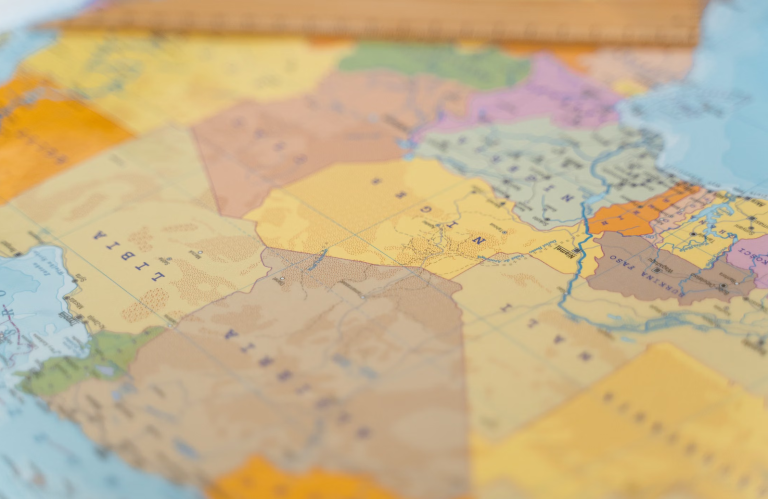
Cohen lists instability as a deterrent: at least nine successful coups since 2020, and military governments in Burkina Faso, Mali and Niger that have, in his words, drastically changed their countries’ economic landscapes.
For Cohen, electricity is the most important constraint. Nearly 600 million people in sub-Saharan Africa still lack access, and no country in the modern era has industrialized without affordable, reliable power. He points to Rwanda as proof that change is possible: household access rose from six percent in 2009 to 75 percent in 2024.
Cohen also stresses the African Continental Free Trade Area, ratified by 50 countries. Implementation, including harmonized rules, tariffs and customs procedures, still has a long way to go.
His conclusion: there will be no single African economic story, but leaders have “a great deal of agency” over which path their people take. The countries most open to intracontinental trade and outside capital, he writes, are likely to fare best.