(AfriquesPlus) - Senegalese AI expert Sedina Moussa Ndiaye is warning that Africa faces a fresh form of colonial domination, this time built around artificial intelligence rather than territory or raw materials.
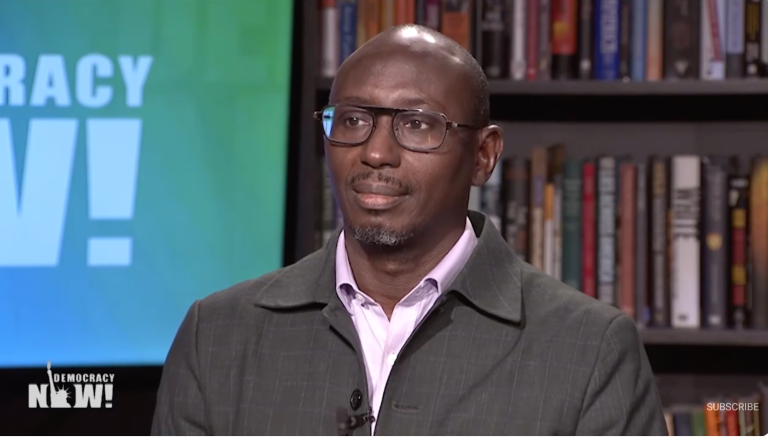
Ndiaye, a senior lecturer at the Cheikh Hamidou Kane Digital University in Dakar and a member of the Global Partnership on Artificial Intelligence, is currently helping the African Union draft a continental strategy to weigh AI's risks against its potential benefits. Speaking to the U.S. news program Democracy Now!, hosted by Amy Goodman and Nermeen Shaikh, he argued that Africa faces two distinct layers of AI risk: the dangers shared by every continent, and a second, Africa-specific threat he calls "colonial AI."
Drawing a direct parallel with historical colonialism, Ndiaye said that just as European colonial powers once seized control of resources, knowledge and the terms of trade, today's dominant AI players are positioning themselves to control the computing infrastructure, data flows, technical standards and skilled talent that African nations need to build their own AI capacity, often pulling that talent off the continent entirely.
He noted that many African governments have already adopted national AI strategies on paper, but implementation is stalling because of a lack of local technical capacity. That gap, he said, is frequently filled by foreign partners who step in to help build out these strategies, but who typically retain control over the underlying data in the process. In his view, this arrangement will not genuinely serve African interests unless local culture and governance are embedded directly into the AI systems being deployed, rather than simply importing technology designed elsewhere.
Ndiaye was careful to note that AI is not purely a threat for the continent. He pointed to concrete gains already emerging in precision healthcare, precision agriculture, individualized learning pathways in education, and the use of AI tools for cultural preservation, areas where he said African institutions are actively putting the technology to work.
Still, he returned repeatedly to the structural problem underlying all of these applications: AI systems inherit the biases of the data used to train them, and most of that data currently comes from outside Africa. That means African users often end up applying tools shaped by a foreign cultural context, even when using supposedly neutral open-source models, which remain built on the same non-African datasets. For countries without the resources to train their own systems from scratch, he suggested, this dependency is difficult to escape.
Ndiaye is bringing this African-centered framing to UN side meetings this week, part of a broader push by the African Union to ensure the continent shapes AI governance on its own terms rather than simply absorbing rules and systems designed elsewhere.