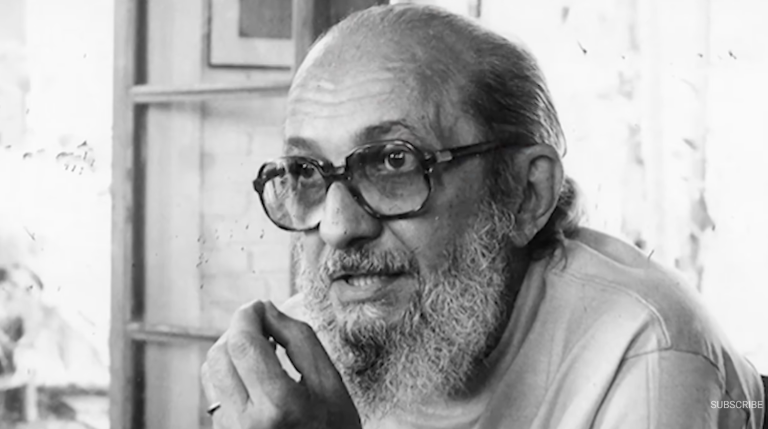
(AfriquesPlus) - Long before Pedagogy of the Oppressed made Paulo Freire a fixture of university syllabi worldwide, he was a practitioner working in some of the poorest and most remote parts of Brazil. A new documentary, Reading the World (Lendo o Mundo), goes back to that earlier chapter, and its timing is hard to ignore. Brazilians vote next month in an election that pits President Luiz Inácio Lula da Silva, a longtime Freire ally seeking re-election, against challengers including Flávio Bolsonaro, son of the former president.
The film centers on Angicos, a small town in the state of Rio Grande do Norte, where in the early 1960s Freire's team ran a literacy campaign that became a model for adult education. Rather than drilling students on syllabic charts, the educators organized "culture circles," in which participants drew on their own daily lives to build vocabulary and discuss the conditions in which they lived. The approach was designed to teach reading and to build what Freire called critical consciousness at the same time.
As reported by Amy Goodman and Juan González on Democracy Now!, the results were striking: hundreds of rural adults learned to read and write in just 40 hours. The film's trailer gives voice to participants, including a former student who says he could not sign his own name before the school arrived, and another who recalls being told that studying could make them citizens.
Co-director Catherine Murphy told the program that the stakes went far beyond the classroom. In the Brazil of that era, she said, about 1% of the population owned most of the arable land, and 70% of people in the northeast could not read or write. Since illiterate Brazilians could not vote, and rural union organizing was prohibited, illiteracy worked as a mechanism of exclusion.
This is the historical backdrop that makes Angicos more than an educational curiosity. Teaching a sugar-cane or farm worker to read meant, in practice, handing that person a claim to the ballot box. Freire's program also came at a moment of intense political ferment under President João Goulart, whose government backed reform, including broader access to education. That was precisely what alarmed Brazil's landowning elites and the military.
The coup, prison and exile
The experiment did not survive 1964. When the military overthrew Goulart, with US backing, the literacy campaign was dismantled. Students, fearing persecution, burned their books. Freire was arrested shortly after the coup and held for 70 days before being forced into exile, which lasted 16 years.
Exile scattered his ideas across the globe. He wrote Pedagogy of the Oppressed while abroad, and the book circulated clandestinely in Brazil under the dictatorship while spreading freely elsewhere. He also worked on adult-education projects in Guinea-Bissau and Nicaragua, and alongside grassroots educators in the United States, according to Murphy.
Maria Luisa Mendonça, the film's consulting producer and director of the Network for Social Justice and Human Rights in Brazil, described what she sees as the core of Freire's thinking: that everyone holds knowledge, and that teaching is an exchange rather than a transfer. Learning, she said, must make sense in the concrete reality where people live, a principle she considers urgently needed at every level of education around the world.
The filmmakers say they deliberately treat the students as co-creators of the method rather than as its beneficiaries. Murphy noted that public attention to Freire tends to focus on his books and philosophy, and much less on the collective of collaborators and learners who shaped it.
Murphy argued that the demands of the early-1960s grassroots movements are still the demands of Brazil's social movements today. She listed better-quality education, broader voting rights, political representation for women, Afro-Brazilians and Indigenous people, labor rights, and land justice. In her view, these issues sit at the heart of the current presidential debate.
The political context is charged. Jair Bolsonaro, the former president, is now in prison for his role in the 2022 coup attempt. Freire's legacy has itself been a point of contention in Brazilian politics in recent years, and his name has often been invoked by both his admirers and his critics in the country's culture wars over schooling.