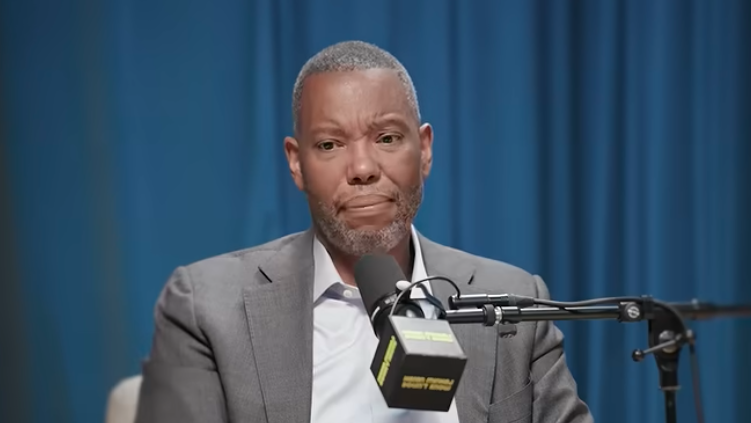
(AfriquesPlus) - In a wide-ranging conversation with host Hasan Piker for his show, Coates laid out the thesis of his Vanity Fair essay "The Next Black President": that Black political ascension in the United States carries an inherent contradiction. The same movement that fought racist state violence at home has repeatedly produced officials — from Colin Powell and Condoleezza Rice to Barack Obama and Kamala Harris — who go on to preside over, or defend, racist state violence abroad. Coates traced this tension back to the 1960s, when Fannie Lou Hamer and Coretta Scott King broke with the civil rights establishment to oppose the Vietnam War, at real political cost to themselves.
He drew a direct line to the 2024 Democratic National Convention, where Kamala Harris invoked the legacies of civil rights icons on stage while the party denied a Palestinian-American speaking slot to convention delegates. Watching Harris pledge to maintain "the most lethal fighting force in the world" from outside the hall — alongside uncommitted delegates staging a sit-in — Coates said he felt the weight of that contradiction directly, even as he stressed deep respect for what her candidacy represented for Black women.
Coates was equally blunt about what he sees as an intellectual culture that mistakes complexity for insight. "There is no quality in American intellectual life that is more overrated than intellect itself," he said, arguing that Americans routinely use sophisticated-sounding reasoning to obscure moral questions that are, in his view, straightforward, while the "wisdom" of ordinary people, including those without formal expertise, often sees more clearly.
He defined American empire concretely: hundreds of U.S. military bases abroad — more, he said, than the rest of the world's foreign bases combined — giving Washington what he called "infinite power to inflict violence virtually anywhere at any point." Reflecting on Obama-era interventions in Libya and Yemen, Coates said he no longer accepts the argument that such violence is an unavoidable cost of governance, comparing it to 19th-century defenses of slavery as economically necessary.
On the question of Black and immigrant communities who feel Gaza, or immigration enforcement, "isn't their issue," Coates pushed back sharply: normalized state violence, he argued, does not stay contained to its original target. He pointed to ICE raids reaching Black neighborhoods in Chicago as proof that "imperial violence" inevitably spreads.
Coates closed on a personal note, describing how encounters with Black diaspora communities in Paris — and painful conversations with Palestinians during his West Bank reporting — have kept him from becoming cynical, even as fame itself, he said, remains "a deeply unnatural thing."