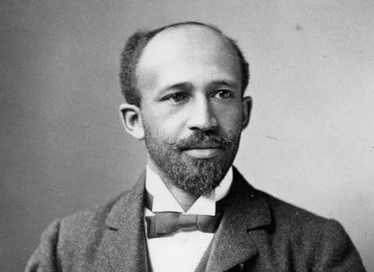
(AfriquePlus) - While W. E. B. Du Bois remains celebrated as a titan of American civil rights and sociology, his foundational contributions to international relations theory have long suffered institutional neglect. According to an extensive essay by Zachariah Mampilly published in the September/October 2022 issue of Foreign Affairs, the American foreign policy establishment systematically sidelined Du Bois during the Cold War, cutting itself off from one of the twentieth century's most prescient analysts of global empire, race, and capital.
Mampilly highlights that the early field of international relations emerged alongside imperial expansion, steeped in contemporary racial theories. Yet, writing in Foreign Affairs as early as 1925 in his essay "Worlds of Color," Du Bois rejected notions of inherent biological hierarchies, later observing in 1935 that "humanity is mixed to its bones." He exposed racial categorisation as an ideological tool engineered to legitimize capitalist extraction, writing that "the profit from exploitation was the main reason for the belief in race difference."
Du Bois argued that domestic racial orders and global ambitions were inseparable. In Black Reconstruction (1935), he demonstrated how American elites fractured working-class solidarity by awarding poor white citizens "a public and psychological wage," aligning their interests with an imperial economic framework that oppressed people of color at home and abroad.
His interwar assessments also chronicled the shortcomings of international governance. Examining the League of Nations' entanglement with private capital in Africa, he condemned the exploitation of Liberia, noting that "her chief crime is to be black and poor in a rich, white world" where race served as the bedrock for Western wealth.
The essay by Mampilly documents how Du Bois’s critique of liberal internationalism led to his alienation from the policy mainstream:
- His 1945 submission critiquing the nascent United Nations for failing to confront "the colonial system" was rejected by Foreign Affairs.
- Targeted by federal agencies during the McCarthy era, he was indicted in the 1950s over peace advocacy before being acquitted, and subsequently had his passport revoked.
- In 1961, facing domestic ostracism, he accepted Kwame Nkrumah's invitation to Ghana, where he died in 1963.
According to Mampilly, Du Bois’s body of work dismantled the premise that foreign policy operates independently of domestic racial hierarchies, demonstrating that authentic democratic governance cannot endure alongside imperial and economic subjugation.